by Carol L. Robinson
Kent State University
See also this Supplemental Page:
The Body of the Condemned & Panopticism
Introduction
Consider the use of the word “medieval” in this scene from Star Trek IV: The Voyage Home (1986). In this clip, Dr. McCoy (who lives in the 2200s, over two hundred years into the future from now) is attacking 1980s medical practices as being “medieval”.
Star Trek IV: The Voyage Home (1986)
“We’re dealing with medievalism here!”
The implication is that the 20th century (the 1900s) is a part of the Middle Ages, which, a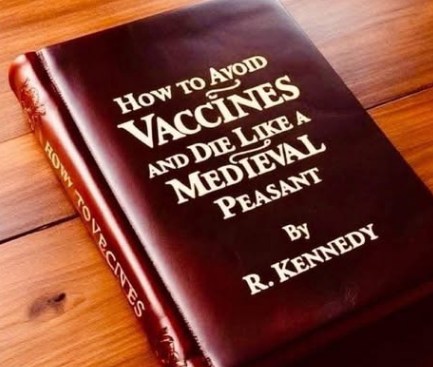 year ago, I would state is of course absurd. However, here in the United States, the current government is fueling a movement to return to more medieval approaches to health and well-being—or so many seem to think so. Honestly, I’m not confident that, given the opportunity, medieval scientists wouldn’t have jumped at the opportunity to understand germ theory and appreciate the success rate of vaccinations. Moreover, Tom Siegfried argues that contemporary science still holds a medieval mentality. He writes:
Science coexists with society. Science shapes society, informs society, enables society to function in ways not possible without an in-depth knowledge of how the natural world works. But you can flip that coin and declare, equally accurately, that society shapes science. Science responds to societal needs, reflects societal values, conceives of nature within the framework of society’s prevailing worldview. And science thrives only in societies where knowledge and reason are not overwhelmed by superstition and prejudice.
Moreover, while the good doctor of Star Trek implies that “medieval” equals “dark” or “unscientific”, many scholars disagree with the notion that the Middle Ages can also easily be known as the “Dark Ages”. For example, James T. Palmer writes:
For the period I work on (say pre-1100), there are literally hundreds of manuscripts on nature, astronomy, mathematics, medicine, and how they fit within Christian worldviews and questions. These manuscripts were not the product of suppression, but rather of curiosity, reading, book-collecting, and practical need. The scientific cultures that produced them – their intellectual, social, and political contexts – were not all the same and were not like later ones or like ones now. They just had different logics, ethics, and uses.
In other words, the environment of people in the European Middle Ages fueled a different understanding of science. I’m not sure that I fully agree with Palmer, but he raises an interesting point about how cultural values affect perception and conception. I also agree with him that ignorance is not at all uniquely medieval. Palmer concludes:
The flipside to this is that when science is “suppressed” in 2019 by political movements it is not “medieval” – it is a distinctly modern problem. It is not as if there were massive medieval repositories of accepted data, large-scale scientific networks across the world, and thousands of rigorous scholarly publications on climate change, disease, and technology, and a pope went “nah” and shut it all down. Call it what it is.
The health and wealth of nations has changed dramatically since the European Middle Ages. To emphasize this point, consider:
Hans Rosling 200 Countries, 200 Years, 4 Minutes
While much of this page focuses on medicine and medievalism, how the other sciences evolved from the European Middle Ages is also interesting. Often mislabeled as the “Dark Ages,” the Middle Ages actually fostered significant scientific advancements in—not only medicine, but also—astronomy and mathematics. There was much technological growth, too, including optics (such as for telescopes, microscopes, and eyeglasses), mechanical clocks, navigation (the compass), engineering (such as for cathedrals). The difference between contemporary science and medieval science is that medieval science was all deeply intertwined with theology as scholars sought to understand God’s creation through natural philosophy and observation. That’s why many refer to the Middle Ages as the “Dark Ages.” But let’s remember that institutions—such as universities and hospitals—are medieval structures that eventually came to support truly scientific discovery and developments.
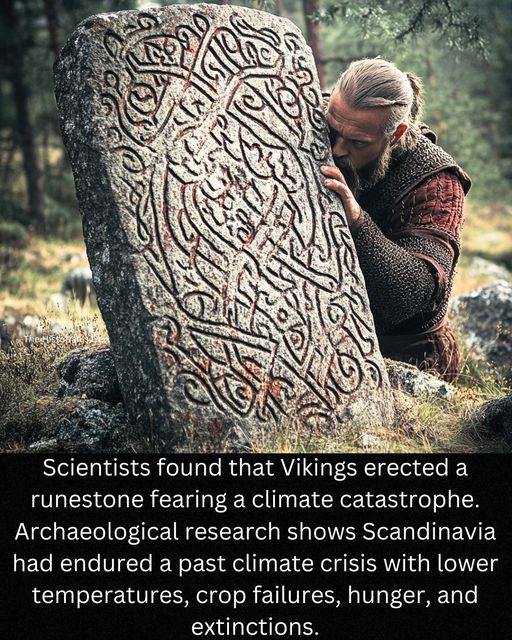
A few years ago, Netflix hosted an interesting adaptation of the story of the fight between Norse (Viking) gods and giants. Angela Weisl and I have been analyzing (and hoping to publish at least one article about) Ragnarok (2020-2023). Set in the 21st century, this dramatic series focuses upon four contemporary scientific concerns that are blended with Norse mythology:
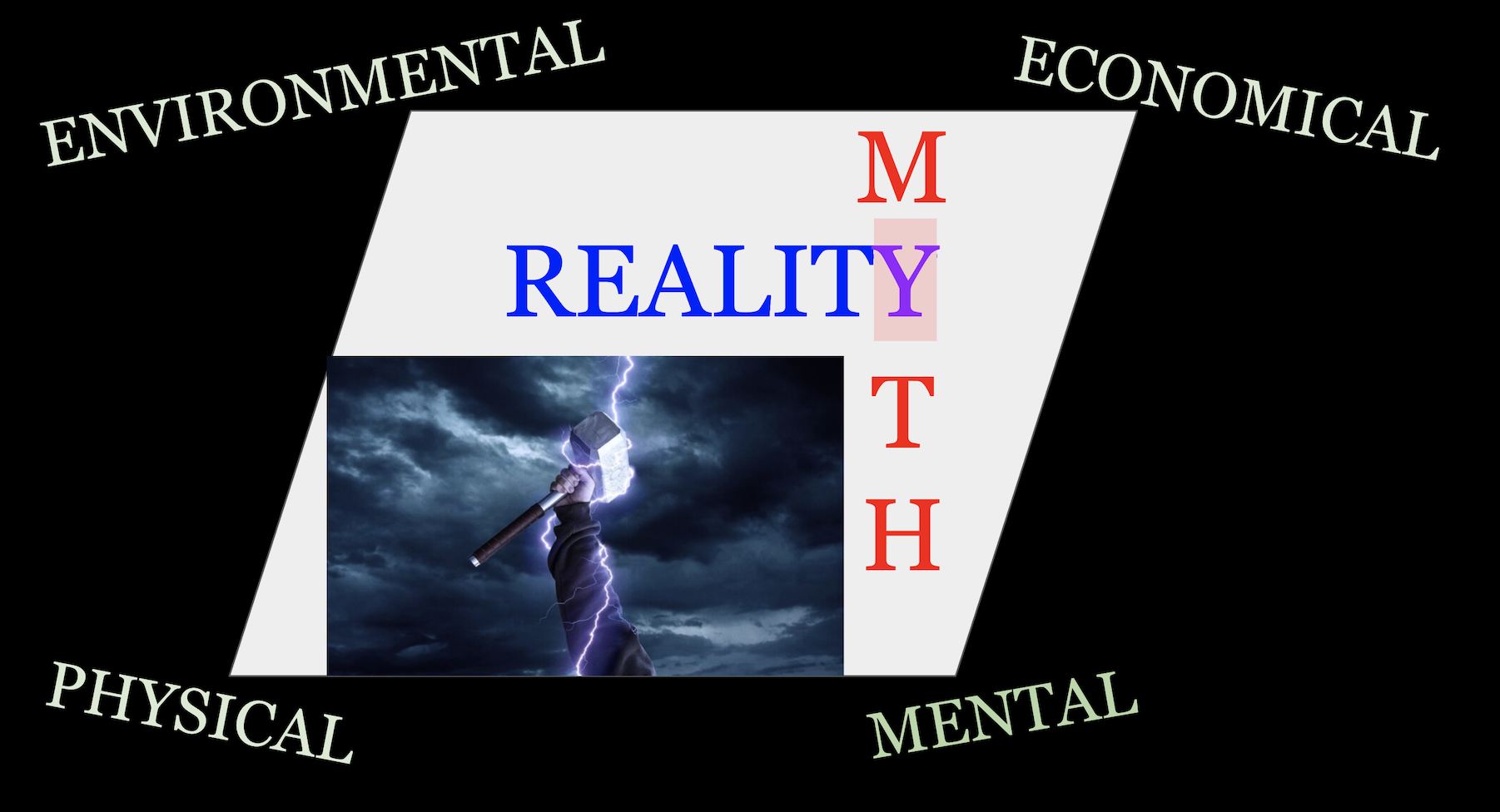
Briefly, the fictional town of Edda, Norway is dominated by frost giants disguised as a wealthy family. The Jutuls own a corporation that provides the economic foundation of the town while also polluting that town, thus creating scientific concerns about the environment, the economy, physical well being, and (ultimately) mental health.
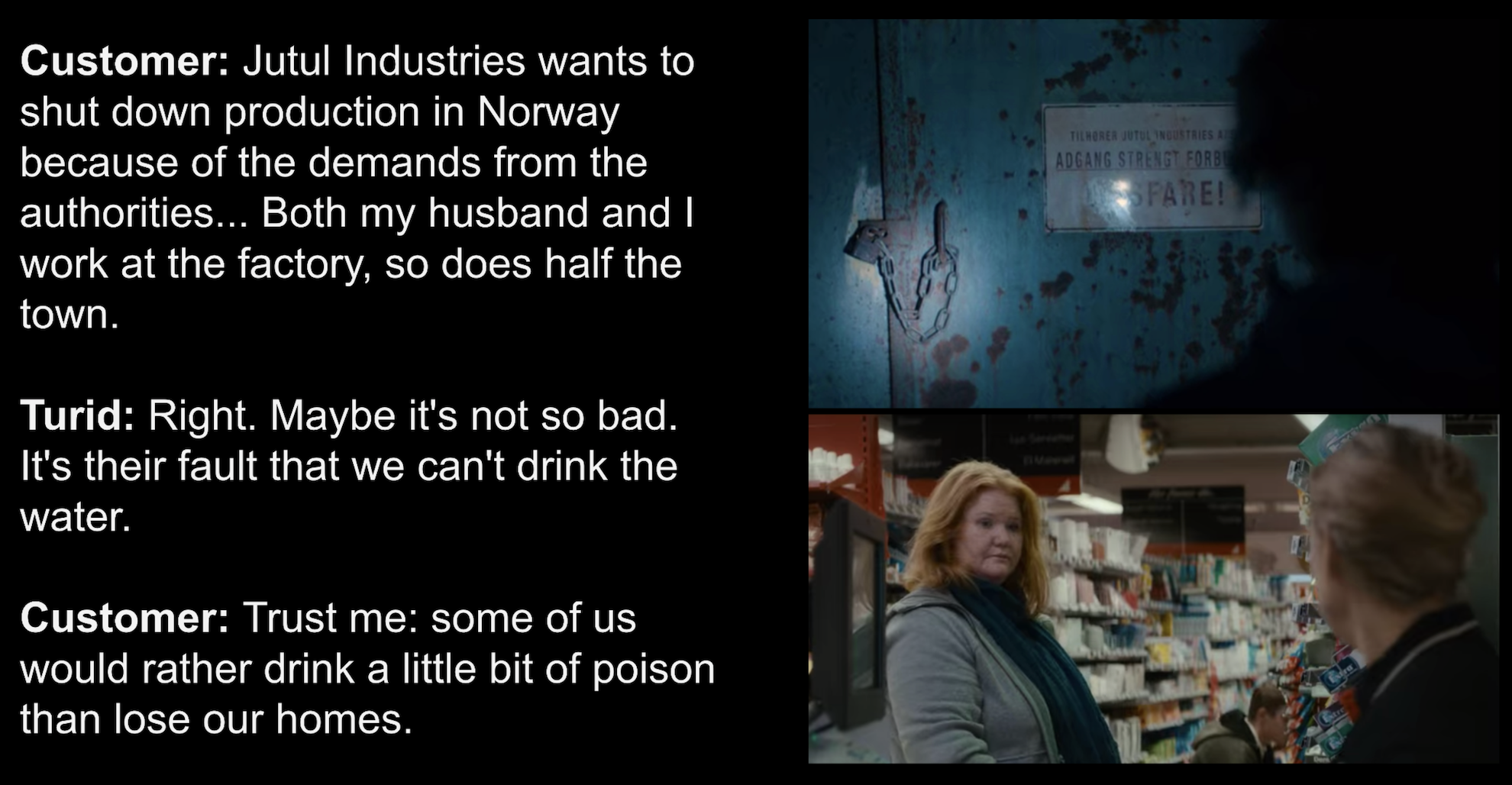
The mental health theme, however, is rather outside the town: outsiders—who are struggling with mental health issues that range from possible schizophrenia (Magne, the elder son) to severe anxieties over gender and sexual identity (Laurits, the younger son) and depression tied to a family death and economic woes (Turid, the mother). Upon the family moving into the town (actually, Turid is returning to her mother’s home) these outsiders become the catalyst for the rejuvenation of the Norse gods within the town, when a one-eyed man (Odin?) touches Magne, who develops a second identity as the god Thor. The whole series is mostly given from Magne’s point of view and concludes from that same point of view.
Ragnarök | Official Trailer of the First Season (of Three)
Readily Available Materials
- Science in the Middle Ages – Rediscovering its Latent Genius
- The medieval mentality of modern science
- Viking History Is Melting Away in Greenland
Climate change is already rotting archaeological sites in the Arctic, and Norse Viking-era settlements are at high risk - What the Vikings Can Teach Us About Adapting to Climate Change
- How a climate crisis helped shape Norse mythology
- The Vikings abandoned Greenland due in part to sea-level rise, study finds
- Climate History: Why did the Vikings disappear from northern lands?
- Prolonged drying trend coincident with the demise of Norse settlement in southern Greenland
- What medieval poets can teach us about climate change, and what evangelicals today get wrong
- Medieval Climate Optimum
- The Climate Epochs that Weren’t
- Roger Bacon & Medieval Cosmology
- The forgotten medieval habit of ‘two sleeps’
- Alvarado: The Anti-Vaxx Movement Puts Us in the Middle Ages
- Did science fiction exist in medieval times?
- Science fiction was around in medieval times – here’s what it looked like
- Witchcraft
- The Real Witches of the Middle Ages
- Opinion: When ‘Just Asking Questions’ About Science Turns Into 300,000 Dead
What was Medieval Medicine Like? | History in a Nutshell
How Safe Were Medieval Medical Practices?
Ancient & Medieval Medicine: Crash Course History of Science #9
Medieval Medicine with Winston E. Black
Medieval Medicine for Modern Infections
From: “Knight Falls” Episode | House M.D.
Star Trek Voyager | Lord Doctor Schweitzer
Find It in Your University Library
- “It’s like a fairytale, really”: Capitalist fantasy, postplanetary rhetoric, and the new space race. By: James Rushing Daniel. Rhetoric Society Quarterly. 2023, Vol. 53, Issue 4, pp. 522-537.
- A return to medievalism in science teaching. By: P. Goldstein and H. Pollet. Science. 1951. Vol. 113, pp. 249-50.
- Fantasy and science fiction medievalisms: from Isaac Asimov to A Game of Thrones. By: Kevin J. Harty. Arthuriana. Summer 2016, Vol. 26, Issue 2, pp. 135-139.
- Future medieval: (Neo)Medievalism in Babylon 5 and Crusade. By: Ann F. Howey. Studies in Medievalism XXVI: Ecomedievalism. Edited by Karl Fugelso with Joshua Davis and Sarah Salih. D.S. Brewer, 2017. pp. 161-175.
- From the begetting of monsters: distorsion as unifier in A Canticle for Leibowitz. By: W. A. Senior. Extrapolation. 1993. Vol. 34, Issue 4, pp. 329-339.
- Turbans, Veils, and Villainy on Television: Stargate SG1 and Merlin. By: Katherine Bullock. ReOrient. Spring 2021, Vol. 6, Issue 2, pp. 151-172.
- Theological word and literary flesh: Bonaventurean cosmology and the cosmic trilogy of C.S. Lewis. By: Junius Johnson. Literature and Theology: An International Journal of Religion, Theory, and Culture. Dec 2016, Vol. 30, Issue 4, pp. 426-438.
- Charms and prayers in medieval medical theory. By: Lea T. Olsan. Social History of Medicine. Vol. 16, Issue 3, pp. 343-366.
- The woman thing: Gynecological cures in medieval Danish medical manuscripts. By: Ailie Westbrook. Journal of the History of Sexuality. Sep 2023, Vol. 32, Issue 3, pp. 375-398.
- Nature as norm in medieval medical discussions of maternal breastfeeding and we-nursing. By: Maaike van der Lugt. Journal of Medieval & Early Modern Studies. Sep 2019, Vol. 49, Issue 3, pp. 563-588.
- Saint Hildegard’s guide to wellness: Herbalism, nutrition, and health advice from a trailblazing medieval nun. Book Review. Publisher’s Weekly, Aug 5, 2024, Vol. 271, Issue 30, p. 54.
- The medieval biological clock? Gendered reproductive aging in medieval western medicine. By: Catherine Rider. Journal of Aging Studies. Mar 2023, Vol. 64.
- The sacrificial herb: Gathering prayers in medieval pharmacy. By: Sara Ritchey. Postmedieval: A journal of medieval cultural studies. Vol. 9, Issue 4, pp. 432-443.
- Symptom and surface: Disruptive deafness and medieval medical authority. By: Jonathan Hsy. Journal of Bioethical Inquiry. Vol. 13, Issue 4, pp. 477-483.
- Medieval herbalism and post-medieval folk medicine. By: Jerry Stannard. Pharmacy
 in History. Jan 1, 2013, Vol. 55, Issue 2/3, pp. 47-54.
 - Headaches in the medieval Medical School of Salerno. By: Maurizio Bifulco, et. al. Cephalalgia. Jul 2020, Vol. 40, Issue 8, pp. 871-877.
- “Fossils” of practical medical knowledge from medieval Cairo. By: Efraim Lev and Zohar Amar. Journal of Ethnopharmacology. 2008, Vol. 119, Issue 1, pp. 24-40.
- Medieval theories of vision in the medical classroom. By: F. Salmon. Endeavour (English ed.) 1998, Vol. 22, Issue 3, pp. 125-128.
- Legacies and prospects in Geniza Studies and the history of medicine: Reconstruction of the medical bookshelf of medieval (Jewish) practitioners. By: Efraim Lev. Jewish History, Dec 1, 2019, Vol. 32, Issue 2/4, pp. 559-562.
- Scanning Saint Amandus: Medical technologies and medieval anatomies. By: Jack Hartnell. Postmedieval: A journal of medieval cultural studies. Summer 2017, Vol. 8, Issue 2, pp. 218-233.
- Domestic medicine: Slaves, servants and female medical expertise in late medieval Valencia. By: Debra Blumenthal. Renaissance Studies. Sep 1, 2014, Vol. 28, Issue 4, pp. 515-532.
- An evidence-based study on medicinal plans for hemorrhoids in medieval Persia. By: Mohammad Hashem Hashempur, et. al. Journal of Evidence-Based Complementary & Alternative Medicine. Oct 2017, Vol. 22, Issue 4, pp. 969-981.
- The role of Ibn Sina (Avicenna)’s medical poem in the transmission of medical knowledge to medieval Europe. By: Rabie El-Said Abdel-Halim. Urology Annals. 2014, Vol. 6, Issue 1, pp. 1-12.