by Carol Parrish Jamison
Georgia Southern University
Who says chivalry is dead? Knights and warriors live on in the digital age. Both the heroic and chivalric codes are commonly adapted in works of medievalism.
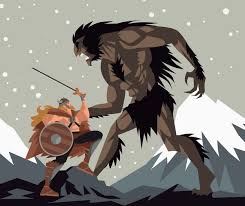
Let’s start by looking at the values inherent in the medieval heroic code:
- -the blood feud: bonds of kinship were also extremely important to the Germanic tribes. If a family member is killed, the surviving members are expected to exact vengeance.
- – wergild: price of a man; this is a peaceful method of settling the blood feud by payment. If a warrior kills someone, he may pay the price of the man, which is determined by the rank and wealth of the deceased.
- -exile: the worst possible fate of a warrior, sometimes as punishment for a crime. Germanic tribes had group rather than individual identities. Thus, separation from lord and family was the worst possible punishment.
- -elegiac mood: some say that all Old English poetry is elegiac. In the context of Old English literature, ‘elegiac’ refers to the sense of loss and isolation that occurs when a warrior is separated from his lord and family
- – peace weaving: women of the upper class were often married off, sometimes to a potential enemy, in order to seal peace alliances. Men could also be part of these marital arrangements. Further, the child of the marriage would be sent back to the woman’s family, usually to be raised by her brother. This arrangement would further seal a peace agreement. However, peace weaving did not always work, and when arranged marriages failed, women could be caught in the crossfire. When successful, though, the woman could emerge as a sort of diplomat and exert some power in her husband’s kingdom.
- – physical and moral courage: perhaps the greatest value of the early Germanic warrior. Cowardice is the worst of vices.
- – boasting: a necessary aspect of the warrior code. The warrior would boast of past glories in order to esteem himself in the eyes of his lord.
- -ofermod: excessive boasting; boasting is necessary for advancement, but too much boasting is seen as arrogant and dangerous.
- – gift giving: a critical aspect of feudalism. The lord (and often his wife) would bestow lands and gifts on those who serve loyally and effectively. Gifts would also be given as rewards for valor on the battlefield.
- – mead hall: the center of cultural activities; gathering hall for the warriors. In the meadhall, the king would distribute gifts and rule his kingdom; scops would tell stories; warriors would boast; all would feast and celebrate.
- – fate: a strong notion in Old English society; “fate goes ever as it must.“ Old English society held the belief that the only choice is how man reacts to his destiny.
- – scop: Old English storytellers; they are the voice of the community and the carrier of tradition; scops might spin narratives to muster enthusiasm for warfare, to glorify heroes, or to demonstrate negative examples.
- – oral culture: Old English originally had no writing system. They used runes, or futhark,and adopted Latin alphabet only after they accepted Christianity. Even so, learning happened in the church. Most of the early Germanic were illiterate unless associated with the clergy.
Beowulfian Warriors in the Digital Age
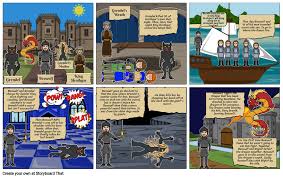
Let’s see how these heroic qualities play out in some popular Beowulf adaptations. Do they maintain relevance? Are they reappropriated?
Novels:
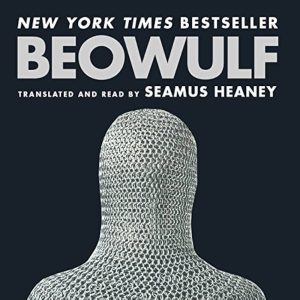
Seamus Heaney’s 1999 BEOWULF A NEW VERSE TRANSLATION BILINGUAL EDITION, ISBN 9780393320978
The famous Irish writer beautifully, if not always precisely, captures the spirit of the original text. One might consider this, and all, translations as medievalism in that they are faithful retellings, but nonetheless retellings with modern audiences in mind. Heaney occasionally incorporates Hiberno-English to capture the mood of his narrative. For instance, after the fight with Beowulf, Grendel “hirples” back to his home. Despite these stylistic flourishes, Heaney preserves all aspects of the warrior code.
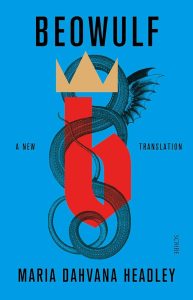
Maria Dahvana Headley’s BEOWULF: A NEW TRANSLATION, ISBBN 9780374110031. 2020
“Bro! Tell me we still know how to speak of kings! In the old days, everyone knew what men were: brave, bold, glory-bound.” You’ve never read Beowulf like this! Headley translates the epic using contemporary street talk. She preserves the heroic spirit of the original text and connects it to contemporary ‘bro’ culture, showing how modern machismo is, in the end, ofermod.
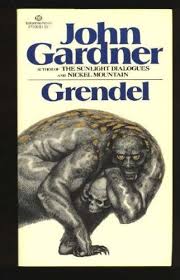
John Gardner’s GRENDEL, ISBN 9780679723110. 1971
The Beowulf story is told from the angsty, existential view of the monster Grendel. Gardner reimagines the text for modern audiences and invites sympathy for them monster Grendel.
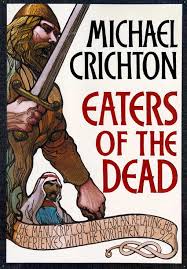
Michael Crichton’s EATERS OF THE DEAD, ISBN 0525436383. 1976
This book is a fictionalized account of (actual historical figure) Ibn Fadlan, who finds himself along on Beowulf’s journey to slay the monster ‘Grendel,’ actually a band of cannibals. The book takes the form of a faux academic study. It was made into a movie called The Thirteenth Warrior.
Susan Signe Morrison’s GRENDEL’S MOTHER : THE SAGA OF THE WYRD-WIFE, ISBN 9781785350092. 2015.
This novel, set in Anglo-Saxon times, portrays Grendel’s Mother as being fully human, washed upon the shores of Denmark, with the character representing an integration between the old ways of the Scandinavian/Germanic tribes, and early Christianity. This novel has won a number of awards and has numerous allusions to other Anglo-Saxon works. Works of medievalism, such as Morrison’s novel, often offer feminist perspectives, reimagining the heroic code from a woman’s point of view.

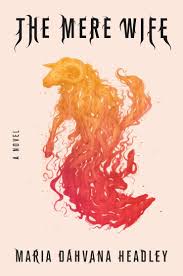
Maria Dahvana Headley’s THE MERE WIFE: A NOVEL, ISBN 9 781250214942. 2018.
This novel retells the Beowulf story from the point of view of Grendel’s Mother, set in contemporary, suburban America. In Headley’s version of the hero’s tale, both Grendel’s mother and Beowulf are American war veterans, and Grendel is a Black youth. The novel reshapes the original subject matter as a commentary on contemporary social issues in America, including poverty, racism, sexism, and class divisions.
Movies:
Beowulf 2007
Interstingly, Beowulf has never been successfully adapted into a popular film .This film, that uses motion-capture animation, is perhaps the best attempt. This reimagining of Beowulf casts Angelina Jolie as Grendel’s mother. . As with many works of medievalism, it veers from the original, giving Beowulf a love interest (Wealtheow) and complicating the plot by making Grendel into the son of Hrothgar. It does, however, get some things right. Grendel, who lives in a mere, looks somewhat like a sea creature. True to the original, Beowulf chooses to battle Grendel without armor or weaponry.
https://youtu.be/bI0iLWPKWbQ?si=xPBMKoqg7JY5PUuj
The 13th Warrior 1999.
This is a movie adaptation of Crichton’s novel (see above).
https://youtu.be/knpj6iwYF1c?si=xHaR5Nffz1ftnMs7
Beowulf and Grendel 2005.
A Canadian-Icelandic collaboration that adds new characters to the traditional story, giving Grendel a father and a son. The movie was not a success.
https://youtu.be/V7jjEpi2vRI?si=mMSYAx-Oo5bUjV2B
However, a documentary about the difficulties making of this film, Wrath of Gods (2006), won several awards. Might this documentary, an account of the making of a work of medievalism, be considered neo-medievalism?
https://youtu.be/wtK9vWQSHeY?si=73efDRQytUOqr8_v
Other adaptations:
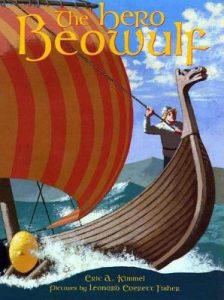
Beowulf-inspired works of medievalism also include graphic novels and comics, children’s literature, music, art, and video games.

Vikings in the Digital Age
Vikings hold a special fascination for modern audiences. The historical reality of Viking culture is somewhat at odds with their frequent portrayal as pillaging, plundering barbarians. Works of medievalism, however, play up on these stereotypes. Vikings appear in comic strips, manga series, television series, movies, and, prominently, video games.https://youtu.be/9GgxinPwAGc?si=yFtmi855tCqLhQ0b Let’s look at a few of the more colorful depictions of Vikings.
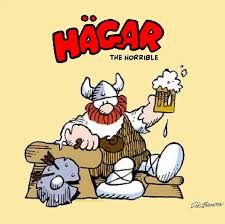
Hagar the Horrible (comic strip) 1973-2017:
This long-running cartoon strip looked at American life through the lens of Viking lore.
Vikings 2013-2021:
This long-running series was inspired by the Norse stories featuring Ragnar Lothbrok. A “historical drama” that incorporates some actual historical events, the series also portrays the Vikings a violent and blood-thirsty.
A more light-hearted approach to Viking culture is the comedy series Norsemen which deliberately debunks the modern portrayal of the brutish warrior. In this scene, a Viking repeatedly fails to set fire to his brother’s funeral pyre in a burial at sea.
https://youtu.be/ojEAU1Pw9S0?si=TKkebyU25AGm92qf
George R. R. Martin also had a penchant for Viking medievalism, most readily apparent in his portrayal of the Greyjoy family.
https://youtu.be/p9vZMG5u3tc?si=6FLe7zj32kCCwhEv
Vikings feature prominently in video gaming. Among the most popular Viking-inspired games are Assassin’s Creed Valhalla, God of War and God of War: Ragnarok, Valheim, Northguard, and Vikings Go Berserk.
Helpful Resources and Further Reading:
The Most Popular Viking-Themed Games
Reflections on Our Fascination with Vikings
Go Berserk for these 12 Viking-Inspired Comics